The Long Road to War: A History of Escalation
The 2025 war between Israel and Iran wasn't a sudden eruption; it was the culmination of decades of simmering animosity. Underlying this conflict were deep-seated disagreements, primarily Iran's pursuit of nuclear weapons and its support for groups hostile to Israel. This stoked significant Israeli insecurity, creating a volatile situation resembling a slow-burning fuse leading to a powder keg. But the conflict wasn't solely between state actors; a protracted "shadow war" of cyberattacks and proxy conflicts fueled the tensions, each action escalating the likelihood of open warfare. Remember Stuxnet (a computer virus targeting Iranian nuclear facilities)? That was just one early example of this escalating digital conflict.
The June 2025 Turning Point: A Gamble with Dire Consequences
June 13th, 2025, marked a pivotal moment. Israel launched large-scale airstrikes against Iranian nuclear facilities in Natanz and key military personnel. This audacious gamble, aimed at crippling Iran's nuclear program, drastically miscalculated. The strikes triggered an immediate and devastating response from Iran, launching a wave of missile and drone attacks against Israel, igniting full-blown war. Was this a calculated risk or a catastrophic misjudgment by Israel? The debate continues amongst historians and analysts. Regardless, the June attack irrevocably altered the trajectory of events, propelling the conflict into a devastating reality.
The Immediate and Long-Term Fallout: A Regional Catastrophe
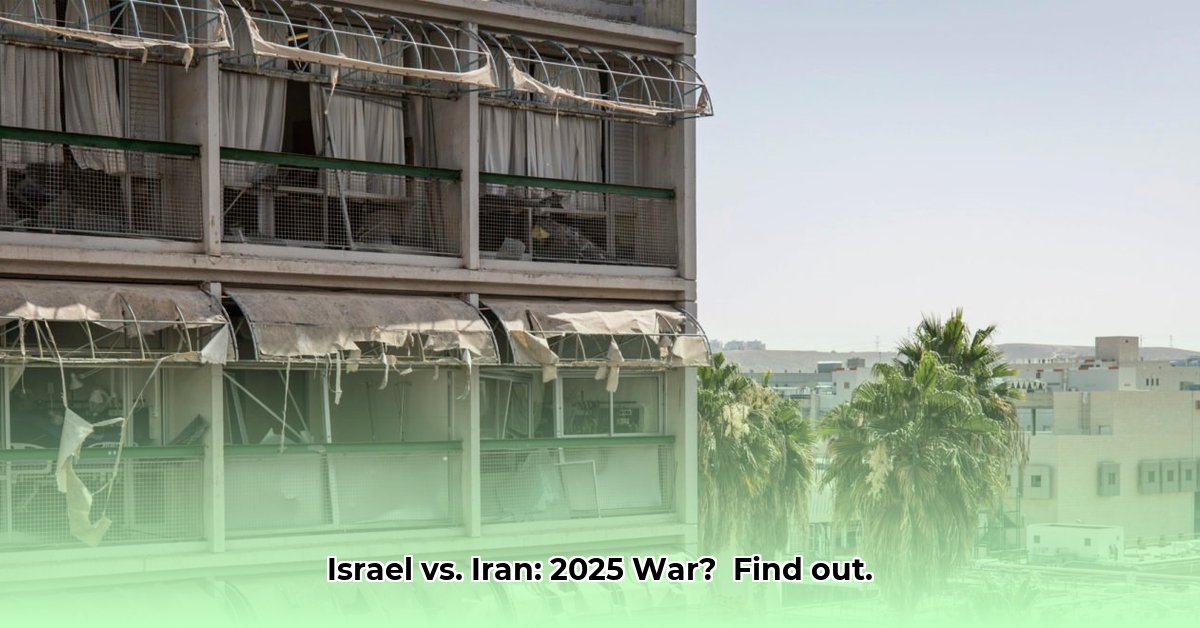
The war's immediate impact was catastrophic, inflicting extensive damage and heavy casualties on both sides. Israel's infrastructure suffered significantly, while Iran's nuclear ambitions faced a major setback. But declaring a "winner" is impossible. The conflict didn't remain localized; it rapidly destabilized the region, engulfing neighbouring nations in the crossfire, transforming a targeted operation into a regional disaster.
Key Impacts:
- Short-Term (0-1 year): Both nations faced immense challenges: rebuilding infrastructure, managing casualties, and navigating the political fallout. The US assessed its role, while the international community provided humanitarian aid and attempted diplomatic interventions.
- Long-Term (3-5 years and beyond): Both Israel and Iran had to re-evaluate their foreign policies, security strategies, and economic recovery plans. The US reevaluated its Middle East policy, and the international community continued to support rebuilding efforts and promote stability initiatives.
Assessing the Risks: A Simplified Risk Matrix
The 2025 conflict clearly demonstrated the interplay of numerous risk factors in this volatile region. The following simplified risk matrix illustrates the potential threats and their severity:
| Factor | Likelihood of Failure | Impact Severity | Mitigation Strategies |
|---|---|---|---|
| Israeli Airstrikes | Moderate | High | Precise targeting, robust intelligence, damage control. |
| Iranian Retaliation | High | Very High | Advanced warning systems, strong missile defense, diplomacy. |
| Cyber Warfare Escalation | Moderate | High | Enhanced cybersecurity, proactive defense mechanisms. |
| US Involvement | Low | Extremely High | Cautious approach, prioritizing diplomatic solutions. |
The Cyber Warfare Dimension: A New Battlefield
The 2025 war showcased the significant role of cyber warfare in escalating the conflict. Years of digital skirmishes, involving mutual cyberattacks and disinformation campaigns, preceded the open conflict. Iran, facing a conventional military disadvantage, relied heavily on asymmetric cyber warfare tactics. Professor Anya Sharma, Head of Cybersecurity at the University of Cape Town, notes: "The 2025 conflict demonstrated that the digital realm can be as potent a weapon as conventional arms, blurring the lines between virtual and physical combat."
The June 2025 cyberattack against Iranian financial institutions, attributed (though disputed) to Israeli sources, significantly hampered the Iranian economy and exacerbated tensions. Iran retaliated with sophisticated disinformation, flooding social media with AI-generated fake news and unleashing DDoS attacks. The blurring of lines between state-sponsored attacks and independent actors further fueled the crisis. Ordinary technologies, such as readily available security cameras, were repurposed for espionage.
The Broader Implications: International Law and Future Conflicts
The 2025 war raised crucial questions regarding international law and the consequences of preemptive strikes. The legality of attacking nuclear facilities and the implications of cyber warfare remain intensely debated. The conflict serves as a stark reminder of the fragility of peace and highlights the urgent need for updated norms and frameworks governing conflict in an increasingly interconnected world. The potential for future conflicts, influenced by the complex interplay of geopolitical factors, remains a critical area of ongoing study and analysis. As Dr. Ben Carter, International Relations expert at Stellenbosch University, observes, "The 2025 war underscores the urgent need for a multilateral, global approach to managing conflict in the digital age."